


 October 31, 2025



Everything is vibing these days. Vibe testing. Vibe coding. Vibe culture. But when it comes to software, how long does the good vibe really last?
Over the last year, a new wave of creators and entrepreneurs has been building apps and tools with surprising speed, fueled by AI, no-code platforms, and rapid prototyping software. It’s empowering. Someone with limited technical knowledge can now bring an idea to life in a weekend. A product team can demo an early concept in days instead of months.
This is what we call vibe coding: riding the energy of available tools to create a quick product mock-up or even something that feels like a product launch. It lowers the barrier to entry, sparks excitement, and gets people experimenting.
But here’s the catch: vibe-coded projects are not products, they are prototypes. Proof that something is worth exploring.
Setting the Vibe: Why Everyone’s Talking About Vibe Coding?
Every few months, tech finds a new buzzword to rally around. Right now, it’s vibe coding. Depending on who you ask, it’s either the future of building or just another gimmick.
The truth is somewhere in between.
At its core, vibe coding is about momentum. It’s the act of taking an idea and quickly turning it into something tangible using no-code AI platforms. Instead of planning for months or hiring a team upfront, creators ride the “vibe” of accessible tools to see their ideas come to life almost instantly.
This speed has made vibe coding explode in popularity:
- Low barrier to entry: Anyone can sketch out an app without touching a line of code.
- Instant gratification: A prototype can be live in hours, instead of weeks.
- Creative confidence: Founders feel like they’re ready to launch something real and sometimes, early users believe that too.gency is built in from the start.
But hype doesn’t equal sustainability. Much of the vibe coding boom is experimental with micro-apps, widgets, and demos that spark attention but aren’t built to last.
A recent Barclays report confirmed this pattern: traffic to leading AI vibe coding platforms slumped after an early surge, with Lovable down 40% and Vercel’s v0 down 64%. Teams quickly realized that while AI can generate something fast, it can’t generate the right thing without expertise, strategy, and engineering rigor.
This doesn’t make vibe coding meaningless, rather far from it. Used intentionally, it’s a powerful way to validate ideas, build momentum, and attract early interest. It’s a starting point, not the finish line.
Why Prototypes Aren’t Production Ready (Yet)?
Vibe coding can create something impressive, but prototypes are like sketches: they communicate the idea, but they aren’t built to last.
Here are the most common limitations that vibe-coded projects run into:
- Fragility: Quick builds often break once real users start interacting with them.
- Scalability: What works for 10 people doesn’t necessarily work for 1,000.
- Security gaps: Prototypes rarely include the safeguards needed for sensitive or regulated data.
- Integration barriers: AI tools can mock functionality, but real systems like payments or databases require engineering.
- Limitations in custom logic: Unique workflows or business rules quickly outpace what no-code/AI tools can handle.
- Debugging Headaches: When something breaks, you’re often stuck without visibility into the underlying code.
A good way to think about it is through the lens of design. You can rearrange furniture in your living room and get a feel for what works. But if you decide to remodel your kitchen, you’ll need to know about wiring, plumbing, and building codes. This is where DIY ends and experts step it.
Even the most polished vibe-coded prototype is a blueprint, not a building. It can demonstrate potential, but it’s not a foundation to scale a company on.
When Do You Know Your Vibe-Coded Project Is Ready for Professional Development?
You’ve built a prototype. It came together fast and gave you something real to show. But here’s the twist: the “good vibe” that carried you through those early experiments eventually runs out of steam. Prototypes are powerful, but they have limits.
Here are the clear signs you’ve outgrown vibe coding and it’s time to move into professional development:
1. Validating is outpacing the prototype.
The real win of vibe coding isn’t the code, it’s the proof. If your demo is sparking conversations, exciting testers, or convincing investors, it’s done its job. That’s the moment to move from prototype to product.
2. You’re bending the tools to fit your idea.
Hacks, workarounds, and “duct-taped” flows are fine at first, but when you’re spending more time fighting the platform than building, you’ve outgrown it. That’s when custom development unlocks real progress.
3. The stakes have changed.
If your prototype is touching sensitive data, financial, medical, personal, you’ve moved beyond testing territory. This is the moment when professional-grade security and compliance become non-negotiable.
4. You need to connect the dots.
Real products don’t live in isolation. They need to talk to payments, databases, and other systems. If you’re staring at API docs your tool can’t support, that’s your signal to bring in developers.
Bottom line: vibe coding is the spark, not the engine. Reaching these milestones isn’t a failure, it’s a milestone. It means your idea has legs. And the best way forward is to bring in professional developers to carry it across the finish line.
From Prototype to Product: A Real Example
This isn’t just theory, we’ve seen it firsthand.
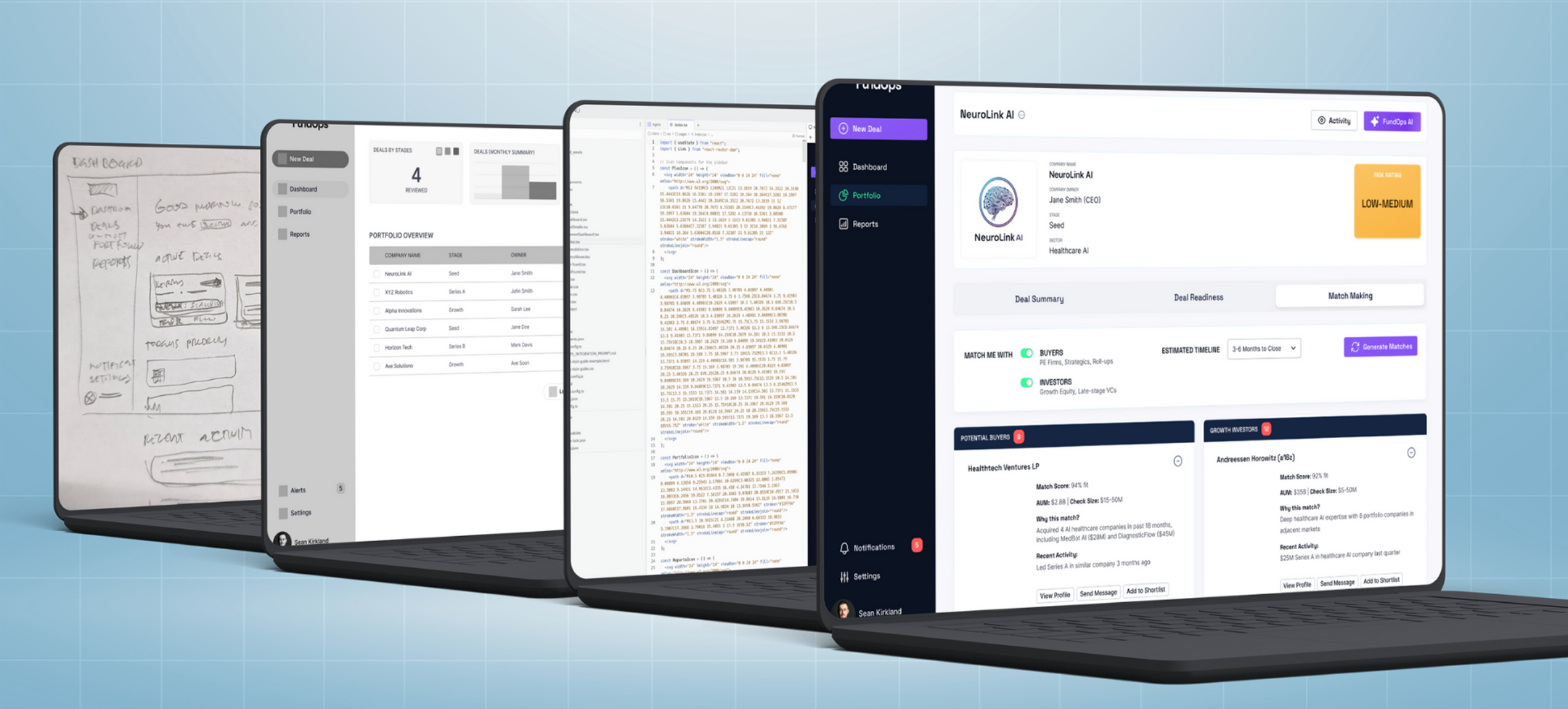
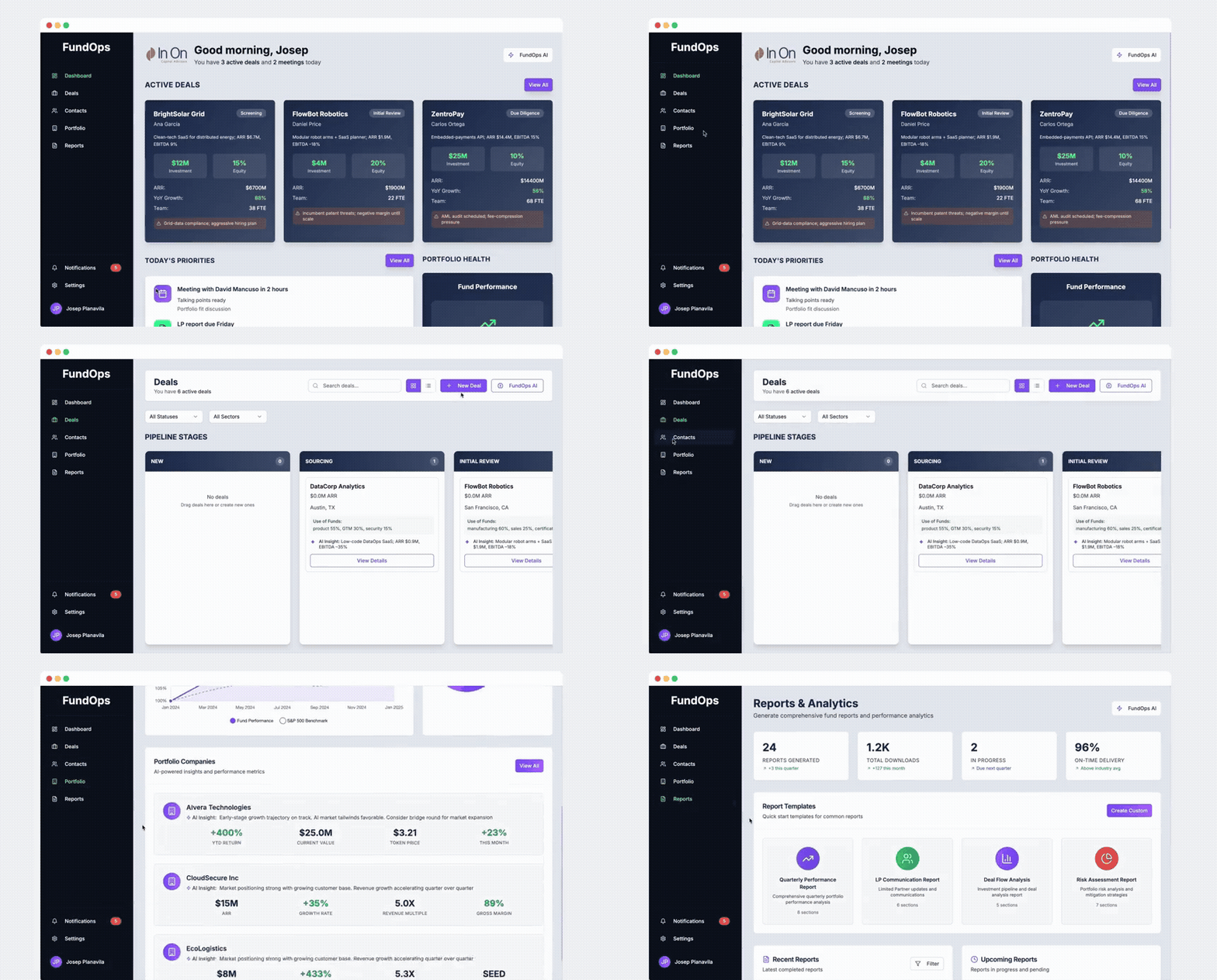
One of our financial clients came to us with a powerful idea but no clear way to show it. Together, we used vibe coding to translate that concept into something tangible, a clickable prototype that captured the core flows and documented their requirements. It wasn’t built for scale, but it was built to spark belief.
And it worked. The prototype impressed investors and unlocked funding. With that support secured, our team moved from vibe coding to full-scale development, designing a secure, compliant platform ready for real financial data and customers.
The lesson? Vibe coding isn’t the end goal. It’s the bridge that shortens knowledge transfer, proves intent, and sets the stage for professional development.
Don’t Lose the Vibe, Build on It
At some point every great idea has to move beyond the vibe. Vibe coding is not a dead end, it’s a beginning. The excitement, speed, and creativity it unlocks are worth celebrating.
But custom software development changes the game. Professional teams build on what you have created. Your prototype becomes the blueprint, and developers add the architecture: security, scalability, integrations, and design that stand the test of real-world use. The vibe-coded version greatly shortens the knowledge transfer. You already know what you want, and developers can use that to accelerate building a robust product.
So don’t lose the vibe. Build on it. With AI as an accelerator and expert development as the foundation, you can build products that last.