


 October 20, 2026


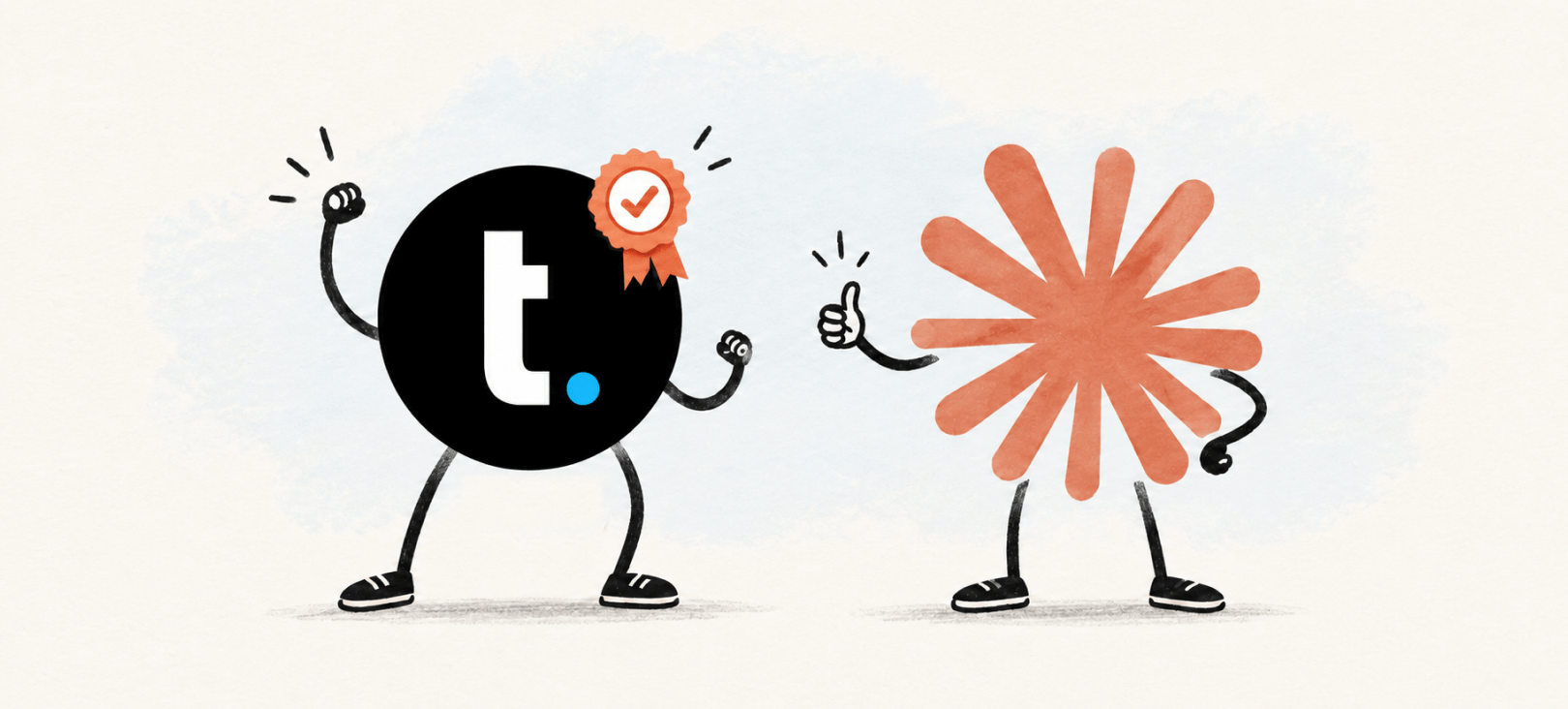
There's another credential in the mix at Troon Technologies: Anthropic's Claude certification.
It’s formal recognition of expertise in a platform we’ve been building on for some time. The certification is Anthropic’s own standard for the people who design and build systems on Claude. It focuses on what matters once AI moves past the demo stage: how it connects to your tools and data, how much it’s allowed to do on its own, and how it stays reliable in production.
What This Means for Clients
When Claude is the right fit, your system is designed by architects tested by the company that builds it, with the integrations, guardrails, and reliability that production demands.
And when Claude isn’t the right fit, that recommendation comes from people who know it well enough to say so.
That second point matters as much as the first. Troon’s Claude certification sits alongside deep, hands-on work across Microsoft and OpenAI, so the advice you get isn’t tied to any one provider. Every platform has its strengths, and every provider keeps changing, with new models, retired models, and new pricing. Working across all three means your AI can keep running smoothly through all of it.
Here’s why going deep on every platform matters, and what it means for the systems we build with you.
The Hidden Cost of a One-Platform Approach
Sooner or later, every client asks the same question: Which AI platform should we actually use?
The honest answer is “it depends” on where your data lives, what the AI needs to do, who will use it, and what it should never be allowed to touch. But “it depends” is only worth hearing from a team that knows every option well. Otherwise, it’s a polite way of steering you toward the one platform they know.
Many AI firms are built around a single platform. Depth isn’t the issue. The trouble starts when every problem gets reshaped to fit the tool the team already knows. The cost rarely shows up in the proposal. It shows up a year later: running costs higher than they needed to be, results that are fine but not great, and a system that’s painful to change when the business does, or when the provider does.
Problem First, Platform Second
The goal shouldn’t be to make a business fit an AI platform. It should be to find the AI platform, or combination of platforms, that fits the business.
Sometimes that’s Microsoft. When your people already live in Microsoft 365, and security and identity run through Azure, building there removes a lot of friction. Sometimes it’s OpenAI, with its broad, mature ecosystem and the fact that many teams already use ChatGPT every day. And sometimes it’s Claude, which tends to shine on long documents, careful reasoning, and agents that act across your systems under tight controls. Often, the best answer uses more than one.
The choice shouldn’t be automatic. A model that performs brilliantly on one task may be unnecessarily expensive for another. A platform that integrates seamlessly with one organization’s infrastructure may introduce friction for another.
And the landscape keeps changing. What works best today may not be the best option six months from now.
This is why the ability to evaluate platforms independently is just as important as knowing how to build on them.
Knowing all three in depth also lets you plan for the bad days. For systems where availability is critical,
multi-model fallbacks can allow requests to switch to another provider when the primary one is
unavailable.
Of course, switching models isn’t as simple as changing a name in the code. Different models behave differently. Prompts, integrations, and responses need to be tested to make sure the fallback actually works.
Not every application needs this level of redundancy, however expertise across platforms makes it possible to build it where it matters.
Expertise You Can Put to Test
Expertise across various platforms is easy to claim but harder to show. A certification though turns “we know this platform” into something an independent test has confirmed.
Anthropic, the company that builds Claude, certifies architects through its own exam, not a course or a webinar, but a test you either pass or don’t. Troon architects have now passed it, adding a formal credential to production work across Microsoft, OpenAI, and Claude.
But a certification alone doesn’t tell you whether a team can turn a promising AI concept into a reliable production system. This takes practical experience with integration, data quality, security, model behavior, ongoing costs, and all the things that don’t necessarily show up in a polished demo.
So, before choosing an AI development firm, there are a few items worth checking:
- Credentials you can verify with the organization that issued them
- Systems they’ve put into production, not just pilots
- A reason for their platform choice beyond “it’s what we use”
- A plan for what happens when a provider becomes unavailable?
- How will the system adapt as models, pricing, and business requirements change?
- A clear answer on what the AI will be allowed to touch
The right firm will welcome every one of these concerns.
Built Around Your Business

Platforms, models, and credentials will keep evolving. What shouldn’t change is the starting point: your business, your problem, and the platform that fits it best. Anthropic’s certification gives clients one more reason to trust that choice, whichever platform it lands on.